3rd Workshop on Scalable 3D Scene Generation and Geometric Scene Understanding
ECCV 2026 Workshop
Introduction
Large-scale geometric scene understanding is one of the most critical and long-standing research directions in computer vision, with the impactful applications in autonomous driving, and robotics. Recently, there has been a surge of interest in 3D scene generation, driven by its wide-ranging applications in the gaming industry, augmented reality (AR), and virtual reality (VR). All these have been transforming our lives and enabling significant commercial opportunities. Both academia and industry have been investing heavily in pushing the research directions toward more efficiency and handling the large-scale scene.
The efficiency and quality of the large-scale reconstruction, and generation rely on the 3D representation and priors applied in solving the problem. Moreover, different industries such as robotics, autonomous driving and gaming industry have distinct requirements on the quality and efficiency of the obtained 3D scene structures. The proposed workshop will gather top researchers and engineers from both academia and industry to discuss the future key challenges for this.
Call For Papers
Call for papers: We invite papers of up to 14 pages (in ECCV26 format) for work on tasks related to 3D generation, reconstruction, geometric scene understanding. As the paper will be included the ICCV workshop proceedings, no dual submission is accepted. Paper topics may include but are not limited to:
- Scalable large-scale 3D scene generation
- Efficient 3D representation learning for large-scale 3D scene reconstruction
- Learning compositional structure of the 3D Scene, 3D scalable Object-centric learning
- 3D Reconstruction and generation for dynamic scene (with humans and/or rigid objects such as cars)
- Online learning for scalable 3D scene reconstruction
- Foundation models for 3D geometric scene understanding
- 3D Reconstruction and Generation for AR/VR/Robotics etc
- Datasets for large-scale scene reconstruction and generation with (moving objects)
- Multi-modal 3D scene generation and geometric understanding
Submission: We encourage submissions of up to 14 pages, excluding references and acknowledgements. The submission should be in the ECCV format. Reviewing will be double-blind. Accepted papers will be included in the ECCV workshop proceeding. Please submit your paper to the following address by the deadline: Submission Portal Note: Due to a large number of submission, authors are expected to help review the paper.
Poster Presentation
Spotlight Talks - Part I
| #1. ClickSeg3D: Few-Click Interactive Segmentation via Semantic Embeddings Xueyang Kang; Zijian Yu; Kourosh Khoshelham; Liangliang Nan |
| #5. UCE: Universal Camera Embeddings for Scalable 3D Scene Understanding , Boris Chidlovskii; Victor Domsa; Gabriela Csurka; Levente Tamas |
| #7. Reducing the Gap Between Spatial and Space-Filling Curve Neighbors in 3D Point Cloud Segmentation, Konan Sasaki; Junya Komori; Kazuhiro Hotta |
Spotlight Talks - Part II
| #2. ROODI: Reconstructing Occluded Objects with Denoising Inpainters Yeonjin Chang; Erqun Dong; Seunghyeon Seo; Nojun Kwak; Kwang Moo Yi |
| #6. Towards Real-Time and Adaptable LiDAR Scene Completion, Azhar Hussian; Martin Vossiek; Vasileios Belagiannis |
| #11. Sparse Light Field Sampling Improves Casual 3D and 4D Reconstruction Shamus Li; Ruiming Cao; Laura Waller; Kristina Monakhova; Sara Fridovich-Keil |
Important Dates
| Paper submission deadline | July 15th, 2026 |
| Notifications to accepted papers | July 29th, 2026 Aug. 5th, 2026 |
| Paper camera ready | August 14th, 2026 |
| Workshop date | September 9th 2026 |
Schedule
| Welcome | 8:40am - 8:45am |
| Spotlight Talks - Part I | 8:45am - 9:00am |
| Angela Dai | 9:00am - 9:30am |
| Ping Tan | 9:30am - 10:00am |
| Coffee Break and Poster Session | 10:00am - 10:45am |
| Spotlight Talks - Part II | 10:45am - 11:00am |
| Richard Zhang | 11:00am - 11:30am |
| Andreas Geiger | 11:30am - 12:00pm |
| Andrew Davison | 12:00pm - 12:30pm |
| Concluding Remarks | 12:30pm - 12:35pm |
Invited Speakers
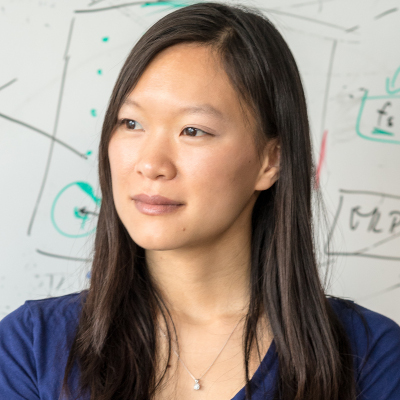
Angela Dai is an Associate Professor at the Technical University of Munich where she leads the 3D AI Lab. Angela's research aims to enable machines to understand, model, and generate real-world 3D environments. She focuses on enabling the creation of rich, semantically grounded, and interactable 3D worlds that allow machines not only to perceive physical spaces, but to reason about them and act within them. She received her PhD in computer science from Stanford in 2018, advised by Pat Hanrahan, and her BSE in computer science from Princeton in 2013. Her research has been recognized through an ECVA Young Researcher Award, ERC Starting Grant, Eurographics Young Researcher Award, German Pattern Recognition Award, Google Research Scholar Award, and an ACM SIGGRAPH Outstanding Doctoral Dissertation Honorable Mention. She has also served as Program Chair for Eurographics 2025 and CVPR 2026.
TBD.

Andreas Geiger is a Professor and is heading the Autonomous Vision Group (AVG) at the University of Tübingen located in Tübingen, Germany at the heart of CyberValley. He is the head of the Department of Computer Science, a core faculty member of the Tübingen AI Center, PI in the cluster of excellence ML in Science and the CRC Robust Vision. He is also an ELLIS fellow and coordinator of the ELLIS PhD program. His research group is developing machine learning models for computer vision, natural language and robotics with applications in self-driving, VR/AR and scientific document analysis.
TBD
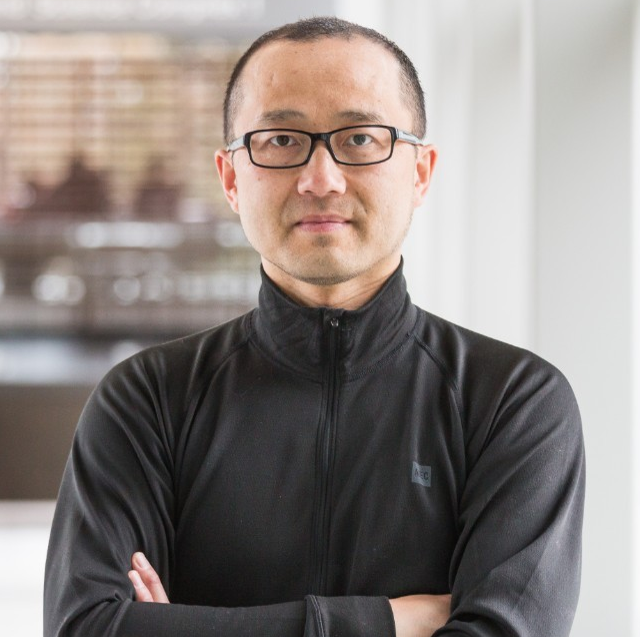
Richard Zhang is a Professor in the School of Computing Science at SFU, and also Vice President of AI and R&D at Augmenta. At Augmenta, he leads the company's effort in developing the most advanced AI models and tools for efficient and sustainable building designs. He directs the GrUVi (Graphics U Vision) Lab, one of the top places in the world to conduct computer graphics and computer vision research. His research is in computer graphics and more broadly, visual computing, with special interests in geometric and generative modeling, shape analysis, 3D vision, spatial AI, geometric deep learning, as well as computational design and fabrication. He has published more than 200 papers on these topics, including 75+ articles in SIGGRAPH (+Asia) and ACM Trans. on Graphics (TOG), the top venue in computer graphics, and he has an Erdös number of 3. His research has been sponsored by Adobe, Autodesk, Boeing, Glodon, Google, and NSERC. He is an IEEE Fellow, hold a Distinguished University Professorship, and is a member of the ACM SIGGRAPH Academy. He was an Amazon Scholar from late 2021 to early 2025.

Ping Tan is a professor in the Department of Electronic and Computer Engineering at the Hong Kong University of Science and Technology (HKUST). Before joining HKUST, he served as the director of the XR Lab at Alibaba DAMO Academy from 2019 to 2022, an associate professor at Simon Fraser University (SFU) in Canada from 2014 to 2019, and an assistant and associate professor at the National University of Singapore (NUS) from 2007 to 2014. Prof. Tan received his PhD from HKUST in 2007 and his Master's and Bachelor's degrees from Shanghai Jiao Tong University (SJTU) in 2003 and 2000, respectively. He specializes in computer vision, computer graphics, and robotics, with a research focus on 3D vision.
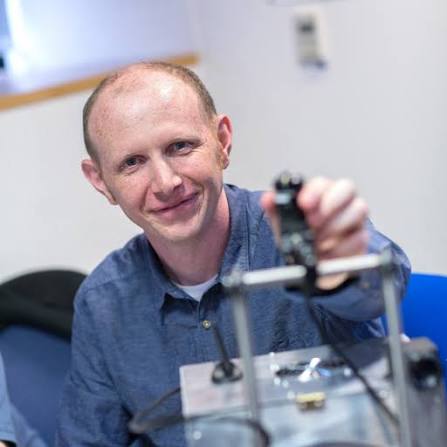
Andrew Davison holds the position of Professor of Robot Vision at the Department of Computing, Imperial College London, and leads the Dyson Robotics Laboratory at Imperial College where they are working on vision and AI technology for next generation home robotics. He is working in computer vision and robotics: specifically his main research has concerned SLAM (Simultaneous Localisation and Mapping) using vision, with a particular emphasis on methods that work in real-time with commodity cameras. He pioneered SLAM with vision from the mid 1990s onwards, and brought the SLAM acronym and methods from robotics to single camera computer vision with the breakthrough MonoSLAM algorithm in 2003 which enabled long-term, drift-free, real-time SLAM from a single camera for the first time, inspiring many researchers and industry developments in robotics and inside-out tracking for VR and AR.
TBD
Organizers

Australian National University, Australia

NVIDIA, US

EPFL, Swiss Data Science Center (SDSC), Switzerland
University of Pennsylvania, US

Australian National University, Australia
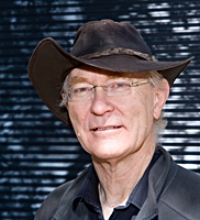
Australian National University, & Google, Australia
Contact
To contact the organizers please use S3DSGR@gmail.com
Acknowledgments
Thanks to visualdialog.org for the webpage format.
The Microsoft CMT service was used for managing the peer-reviewing process for this conference. This service was provided for free by Microsoft and they bore all expenses, including costs for Azure cloud services as well as for software development and support.